
Mike Liu
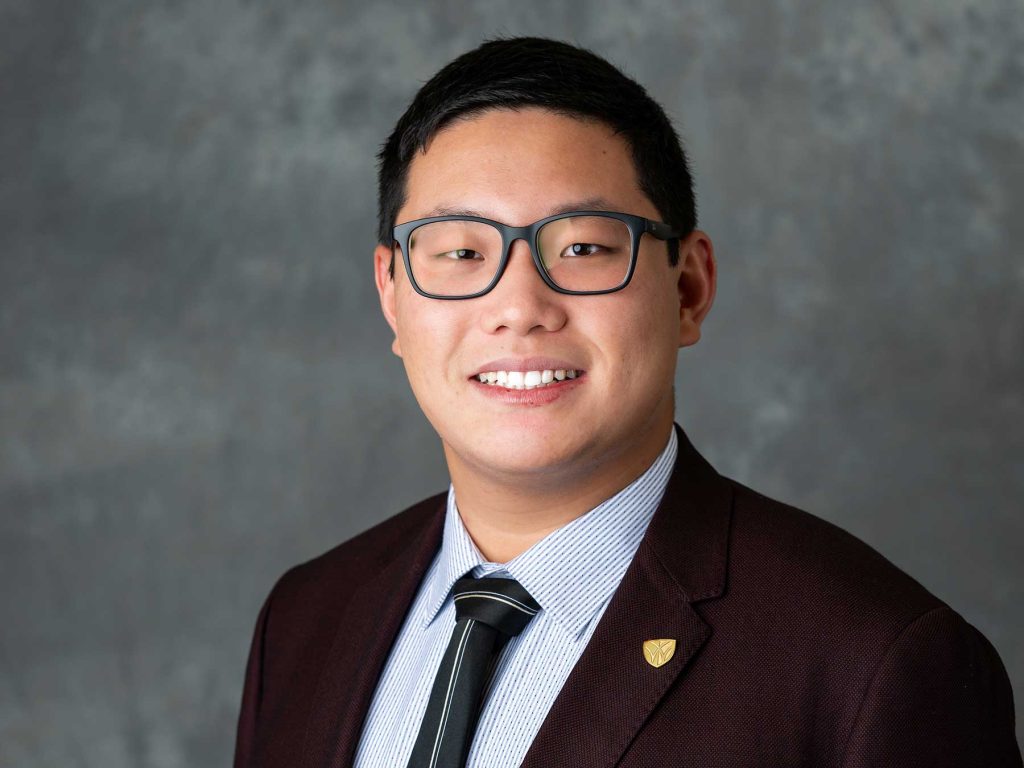
Mike Liu
Major: Economics and Mathematics
Minor: Statistics
Hometown: Shenzhen, China
“Wake Forest rewards initiative; do not wait for certainty before you begin.”
Greatest change since your first year
The most fundamental change I have experienced is a shift from measuring success primarily by my own performance to measuring it by the value I can reliably deliver to others and teams. As a first-year student, my focus was on adjustment, such as learning to thrive in rigorous coursework and building confidence that I belonged on a highly quantitative academic path.
Over time, my priorities expanded. Research and teaching roles taught me that strong work must be reproducible, interpretable, and useful, not simply correct. Leadership roles taught me that impact depends on systems. Clear planning, accountability, and empathy when people are under pressure. I became more intentional about how I manage time, communicate expectations, and follow through, especially when representing student perspectives in formal settings or supporting students who needed help navigating the university.
I have also become more comfortable with uncertainty. Instead of seeking the “perfect” plan, I now focus on building transferable skills, such as analytic rigor, clear communication, and disciplined execution, so I can contribute effectively even when conditions change. That change in mindset has influenced both how I work and why I work. I want my education to translate into outcomes that matter.
Most meaningful non-academic experience
One of my most meaningful non-academic experiences has been serving as a student coordinator with WFU Bridges International. The work was meaningful because it addressed a high-stakes transition: helping international students move from uncertainty to stability, and from isolation to belonging.
In practice, this involved consistent, practical support, for example, organizing airport pick-ups and drop-offs, planning community outings, and connecting students to campus resources when academic, social, or cultural challenges emerged. I learned that “support” is most effective when it is both relational and operational. Empathy matters, but so does structure, because small logistical failures can become major stressors for students navigating a new system.
This experience strengthened my ability to lead with patience, anticipate needs, and communicate across cultural differences. It also shaped how I define leadership, not as visibility, but as reliability. Creating repeatable processes so that care is consistent rather than accidental.
Songs that define your Wake Forest experience
Throughout my 1,500-song playlist, there are a few songs that immediately bring me back to Wake Forest because they are tied to specific routines and memories.
“Viva La Vida” reminds me of the seasons of momentum. Weeks when coursework, research deadlines, and campus responsibilities moved quickly, and I had to stay disciplined without losing perspective. It captures the feeling of striving with purpose.
“Good Days” reminds me of quieter moments, such as late evenings after events, or long study sessions when I reflected on what I learned and regained emotional balance. It represents the part of college where steadiness becomes as important as ambition.
“Golden Hour” connects to my visual memory of Wake Forest. As someone who spent significant time documenting campus life through photography, I associate Wake Forest with light, during early mornings, warm sunsets, and the way the campus feels different across seasons.
Impact of Pro Humanitate
Yes. Pro Humanitate affected my experience by making service feel practical and sustained rather than symbolic. It encouraged me to evaluate opportunities not only by prestige, but by whether they strengthened my ability to support others with competence and consistency.
I saw Pro Humanitate most clearly in roles centered on people, through supporting international students through Bridges International, mentoring peers through teaching and tutoring, and volunteering at community-facing events such as MATHCOUNTS. These experiences trained me to treat empathy as a professional obligation, paired with planning, follow-through, and respect for others’ time.
Looking forward, the motto continues to shape my plans by strengthening my commitment to “evidence with purpose.” I am most interested in work that combines analysis and implementation, using data, economic reasoning, and clear communication to improve decisions that affect real communities. Pro Humanitate did not simply influence what I did at Wake Forest; it raised the standard for how I want to do my work after graduation.
Favorite course outside your major
My favorite class outside my major/minor areas was HMN 211: Dialogues with Antiquity.
The course appealed to me because it demanded a different kind of rigor than quantitative coursework. In economics, mathematics, and statistics, rigor often means formal derivation and correct computation. In HMN 211, rigor meant close reading, fair interpretation, and disciplined argumentation about fundamental human questions, such as justice, responsibility, power, and moral tradeoffs.
What I valued most was that it improved my quantitative judgment. Research and policy-oriented analysis often fail not because the math is wrong, but because assumptions are unclear, narratives are careless, or conclusions are overstated. HMN 211 trained me to articulate claims precisely, defend them responsibly, and remain intellectually honest when evidence is incomplete.
It also reminded me that systems are ultimately human. Even the best empirical tools are applied in environments shaped by values, institutions, and historical context. That perspective strengthened how I approach economic questions and how I communicate them to others.
Favorite Wake Forest tradition
One Wake Forest tradition I value deeply is the semiannual campus-wide photography contest hosted through The Media.
I appreciate this tradition because it reflects what Wake Forest does well. It empowers students to create community through shared projects. The contest is not only about identifying strong images; it is about helping people notice their environment more carefully and tell stories with intention. Students from different majors and backgrounds participate, compare approaches, and learn from one another, often discovering that creativity is a skill that grows through feedback and repetition.
From a leadership perspective, sustaining this tradition also taught me operational discipline, including planning timelines, communicating expectations, and ensuring work is completed to a high standard. It is a small example of how Wake Forest encourages students to lead real initiatives with real outcomes.
In a senior showcase context, this tradition represents my experience of Wake Forest as a place where excellence and community-building can reinforce each other, and where students are trusted to shape campus culture through meaningful work.
Most surprising aspect of your experience
What surprised me most was how accessible high-impact opportunities became once I consistently demonstrated preparedness, initiative, and follow-through. When I arrived, I assumed that meaningful research roles, leadership positions, and professional experiences were reserved for students with perfectly defined plans. Instead, I learned that Wake Forest rewards reliability. If you do the work carefully and communicate well, people will invest in you and trust you with responsibility.
I experienced this in several ways. Contributing to research across disciplines, taking on teaching support roles, and representing student perspectives in formal university settings. I also did not expect to gain such direct exposure to policy environments so early, through an internship in Washington, D.C., that emphasized stakeholder engagement, public-facing communication, and analysis.
The broader surprise was that Wake Forest felt both demanding and supportive. The standards are real, but so is the mentorship culture. That combination taught me that growth is fastest when expectations are high, and support is personal.
Most influential person in your journey
The person who most impacted my Wake Forest experience was Dr. Erik Nesson. Working in his research environment raised my standards for what “good work” means. It involves clear identification logic, careful data construction, and transparency about assumptions and limitations.
Through this work, I learned how rigorous research is produced in practice, for example, cleaning and merging large datasets, documenting reproducible code, and checking robustness rather than relying on a single specification. The topics also reinforced my interest in policy-relevant empirical questions, such as how education-related policies shape long-run outcomes.
Beyond technical training, this mentorship influenced how I communicate. I became more careful about distinguishing “results” from “interpretation,” and more disciplined about explaining what evidence can and cannot support. That shift improved my academic work, my teaching, and my professional writing.
In short, Professor Nesson’s impact extended not only to the content of the research but also to the research culture. It is all about precision, humility, and a responsibility to the truth.
Most rewarding student experience
The most rewarding experience for me was teaching and mentoring, especially as a teaching assistant and a tutor. Teaching is rewarding because it requires you to move beyond personal mastery and take responsibility for someone else’s understanding.
In teaching support roles, I reinforced lecture material through discussion sections and office hours, clarified core concepts, and helped students build problem-solving habits rather than memorizing answers. In tutoring student-athletes, I learned to adapt quickly. Students have different learning styles and time constraints, so effective support requires diagnosing misunderstandings efficiently and building confidence without lowering standards.
The most meaningful moments were not simply grade improvements; they were moments of transformation, when a student moved from anxiety to clarity, began to explain ideas in their own words, and approached exams with composure. Those experiences reinforced a principle I now carry into my broader work. Lasting impact is often incremental, but it is real when it is sustained.
This is also why I value communication as part of competence. Whether in research, policy, or analytics, the ability to translate complexity into understanding is a form of service.
Your idea of Wake Forest in 10 years
I hope what remains the same is Wake Forest’s distinctive culture of high expectations paired with genuine community. I hope the University continues to be a place where faculty and staff know students personally, where mentorship is the norm rather than the exception, and where Pro Humanitate is reflected in concrete habits of service.
I also hope the student experience remains intellectually broad. My education benefited from combining rigorous quantitative training with courses outside my main fields, and I hope Wake Forest continues to protect that breadth because it produces graduates who can reason both technically and humanely.
What I hope will be different is an even stronger infrastructure for global and interdisciplinary engagement. As an international student and someone involved in global collaboration initiatives, I know how much belonging depends on systems, such as orientation, career pathways, and sustained support beyond arrival. I also hope Wake Forest continues to expand pathways that connect data, policy, and technology to real-world impact through applied projects, partnerships, and mentorship.
In 10 years, I would like to return to a Wake Forest that still feels like Wake Forest, while being even better equipped to navigate the complexity of the next decade.
What you’d tell your first-year self
First, I would tell myself to build relationships earlier and more intentionally. Office hours, mentors, and peer networks are not optional. They accelerate growth and open doors to meaningful work. Waiting until you “need” help is often too late. Start building trust before you feel perfectly prepared.
Second, I would advise myself to prioritize depth over breadth. Wake Forest offers many opportunities, but excellence comes from committing deeply to a few responsibilities and doing them with discipline. Learning to say no respectfully is not limiting; it protects quality and prevents burnout.
Third, I would tell myself to document growth. Keep a record of what you learned, what challenged you, and what you would do differently. That habit strengthens reflection, interviews, writing, and leadership decisions.
Finally, I would remind myself that confidence often comes after action. Many of my most meaningful experiences began because I applied, volunteered, or offered help before I felt fully ready. Wake Forest rewards initiative; do not wait for certainty before you begin.
Evolution of your career plans
As a first-year student, my plans were exploratory. I was interested in quantitative problem-solving, but I was also drawn to entrepreneurship and creative work. Early experiences building and leading student-facing projects reinforced my interest in execution, communication, and building something from the ground up.
My plans are now more focused. I want a career that combines rigorous analysis with real-world implementation, work where data and economic reasoning inform decisions in policy, consulting, or analytically intensive roles. This shift came from sustained exposure to research and to applied policy environments. Through The Fund for American Studies and my internship at Alliance for Innovation and Infrastructure, I learned that economic ideas become decisions only when they are clearly translated for stakeholders.
Research and teaching roles further clarified what I enjoy most through asking precise questions, building credible evidence, and communicating conclusions responsibly. The underlying thread did not change. I still want to solve real problems. What changed is that Wake Forest helped me identify the toolkit and the professional standard of rigor I want to bring to that work.